
Candidate engagement
The members who decide your issue should know your business before they vote on it.
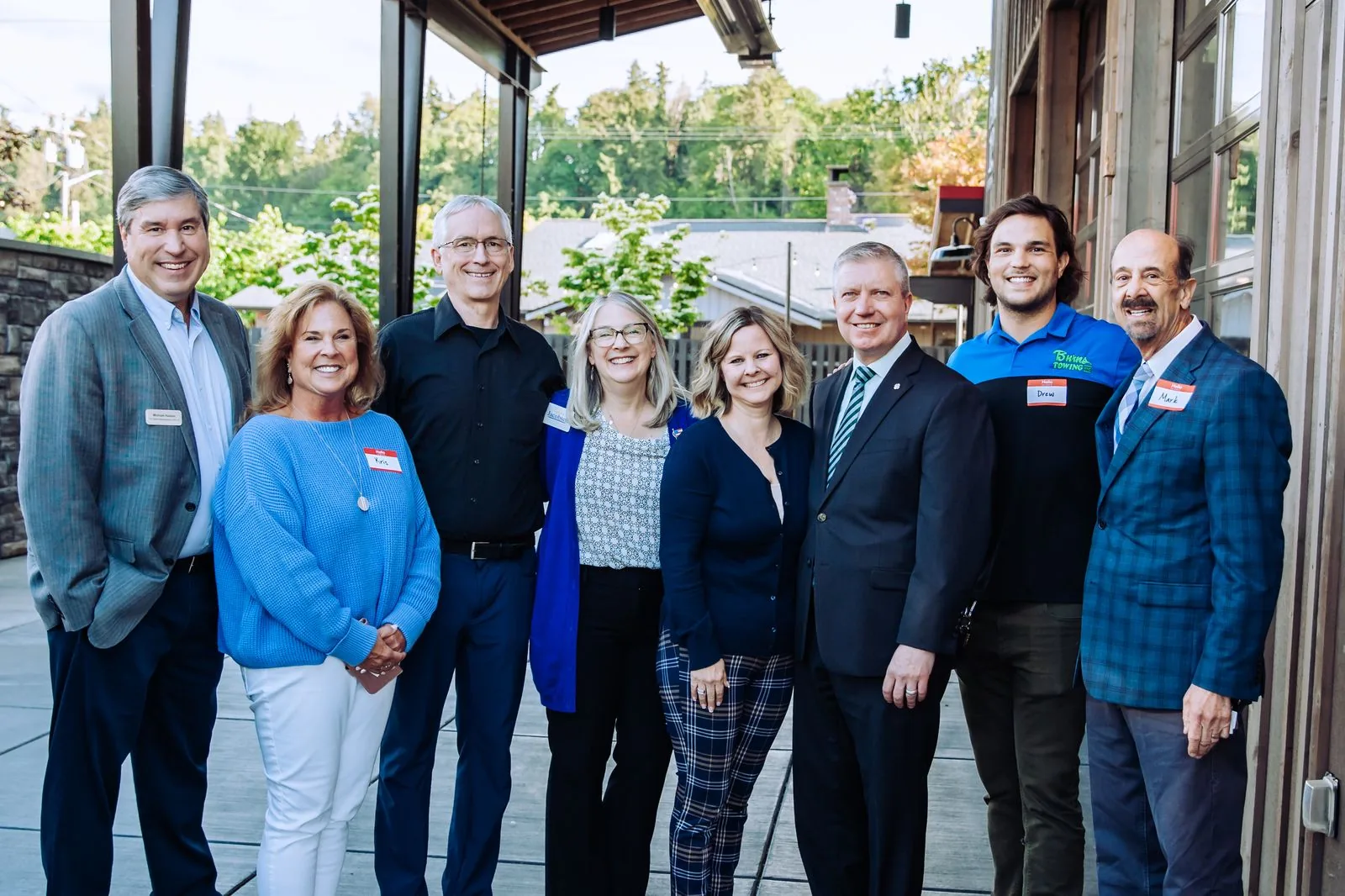
We host small lunches that put legislative candidates from both caucuses at a table with the clients whose businesses their votes will touch. More than 45 of them in the 2026 cycle. No other firm in Olympia runs a program like it.
45+
Candidate lunches hosted in the 2026 election cycle
Both
Caucuses. We host Republicans and Democrats, because our bills need votes from both.
Small
Rooms. A candidate, a few clients, and a conversation about their issues, not ours.
A campaign is the one time a future legislator is actively looking for people to listen to. Most lobbying firms wait until January and then compete for fifteen minutes in a crowded office. We meet them in the spring and summer, before the positions harden and before the office is crowded.
Built around our clients, not around us
The point of a lunch is not for the candidate to meet a lobbyist. It is for the candidate to meet a tow operator, a dentist, a housing provider, a plumbing contractor, or an association director, and to hear from them directly what a bill does to a business. Members remember the person, and when the issue comes up in committee two years later they remember the conversation.
Bipartisan on purpose
Our bills have been sponsored by Republicans and by Democrats, and several have passed without a single no vote in either chamber. That does not happen by accident. We host candidates in both caucuses because a client is better served by a legislature in which members on both sides already understand their business.
The relationship does not end on election night
Members we hosted as candidates arrive in Olympia already knowing our clients by name. Through the interim we keep meeting with them, so that when the session opens the introduction is long since made and the conversation can start with the bill.
How a lunch works
Four steps, repeated more than 45 times in a cycle.
1 · Choose the candidate
Who will matter to your issue
We look at the committee the candidate is likely to land on, the competitiveness of the race, and whether they will listen. The goal is the member who will decide your bill, not the one with the biggest name.
2 · Fill the room with clients
The people the policy affects
A handful of clients whose work the candidate’s votes will touch. Small enough that everyone speaks, and that the candidate remembers who was there.
3 · Talk about their issues
An education, not a pitch
Clients explain how their businesses work and what the Legislature has done to them, for better and worse. Candidates ask questions. We mostly stay out of the way.
4 · Follow through
Interim meetings and a warm start in January
After the election we follow up with the members who won, in district and in Olympia, so that the first conversation in session is about the bill rather than about who we are.
Beyond the lunch table
The rest of the political program
The lunches are the most visible part of the program. The rest of it runs year-round and is built for associations that need a political presence without building a political staff.
- Candidate interviews and questionnaires for your PAC or endorsement process.
- Bipartisan PAC strategy: where contributions do the most good for your issue.
- Legislative Days in Olympia for your members, with the meetings scheduled and the briefings written.
- Receptions and member events during session.
- Advocacy training so your members can tell their own story to a legislator.
Want your members at the table?
Tell us which committees decide your issues and we will tell you which candidates you should be meeting before January.
Start a conversation